Ma Souris
“When you are ready, the guru will be with you.”

Click here to get to an Overview of all of John David’s Interviews with Spiritual Masters
Ma Souris Interview by John David – Love, Presence and Awakening
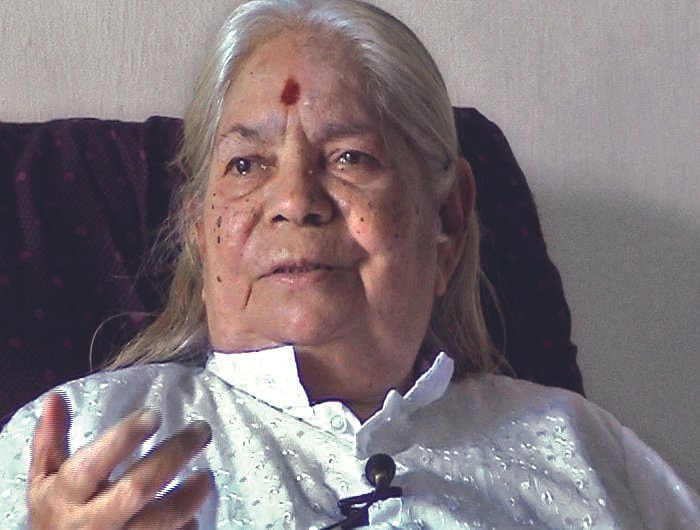
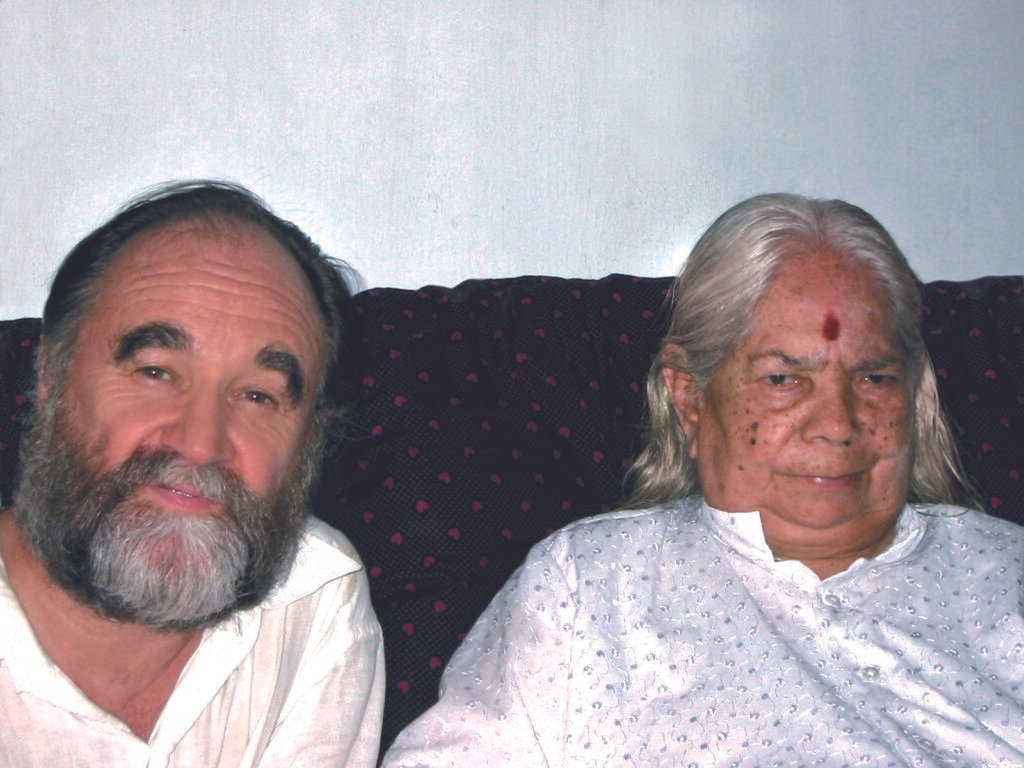
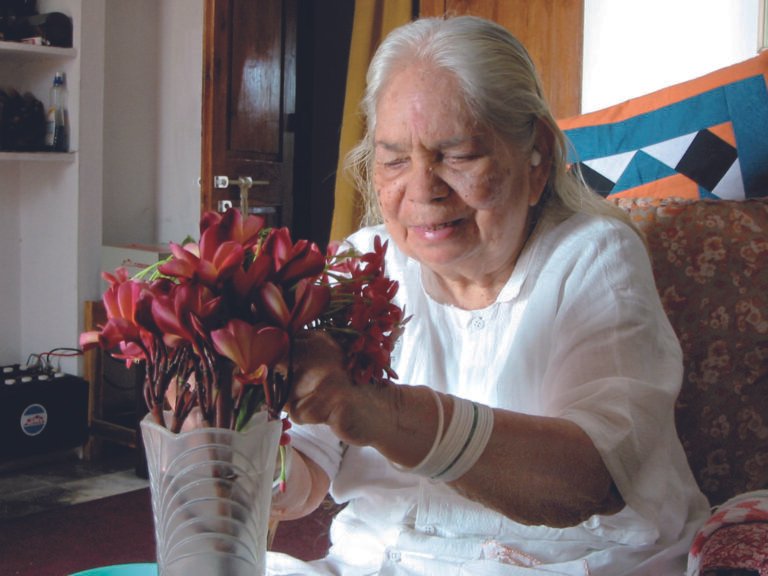
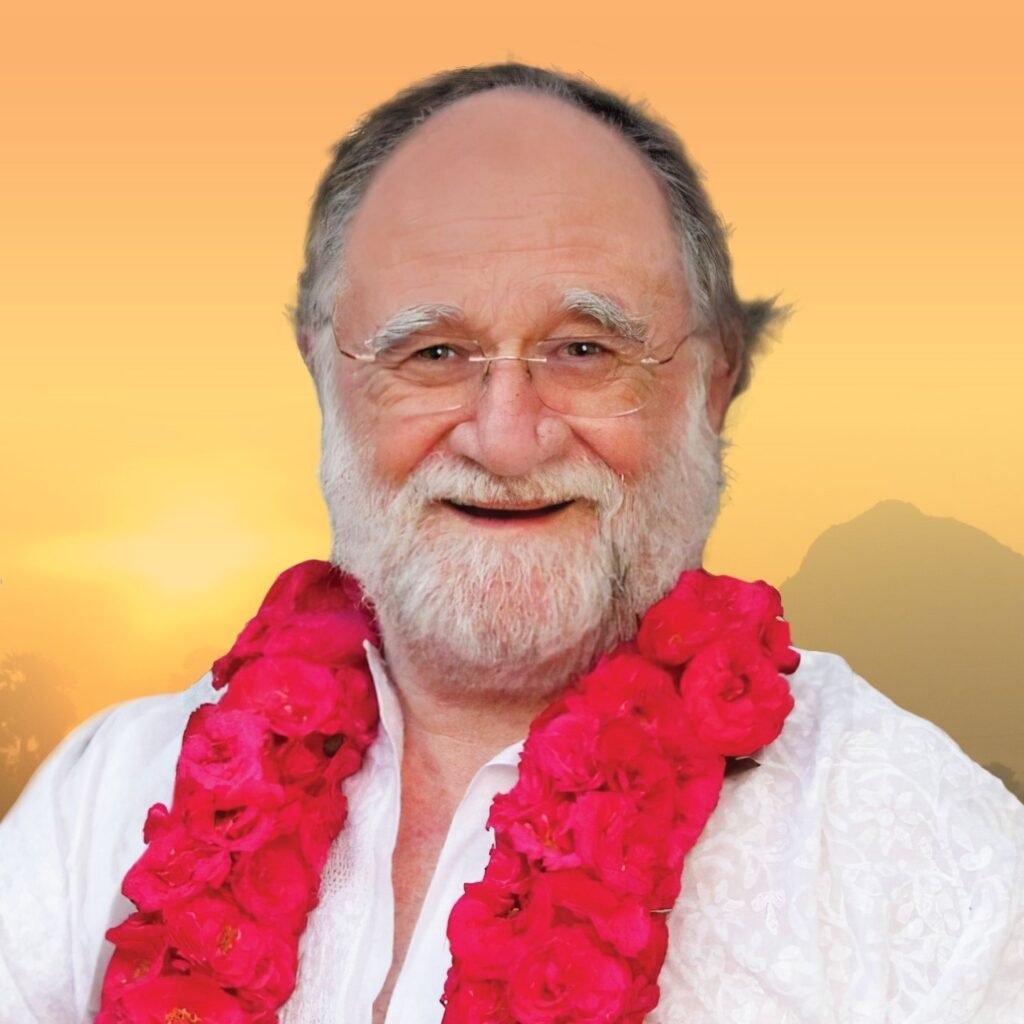
I met Ma Souris in 2003 when she was in her late eighties. She lived simply with a small group of devotees in the north of Andrah Pradesh. I was impressed with her beautiful singing voice. Each morning she sat and arranged vases of cut flowers for the shrines and pujas (devotional ceremonies). She seemed rather formidable during the interview but later on, during an excursion to the beach, a lighter, naughty little girl was revealed.
– John David
Questions and Answers
Sri Ramana proposed the fundamental question, ‘Who am I?’* Who are you?
Many Western seekers come to India looking for enlightenment as if it is an experience. What is enlightenment?
Are there any qualifications for enlightenment? Is sadhana (spiritual practice) necessary? If yes, what form do you advise?
Sri Ramana said that Self-enquiry is the most direct route to realising the Self. What do you say about Self-enquiry? How to conduct Self-enquiry?
When Sri Ramana was asked, ‘When will the realisation of the Self be gained?’ he replied, ‘When the world which is what-is-seen has been removed, there will be realisation of the Self which is the seer.’* What is the true understanding of the world? How to remove the world?
It has been suggested that the mind must be destroyed for liberation to occur. Do you have a mind? Sri Ramana used the term manonasha to describe the state of liberation, meaning destroyed mind. How to destroy the mind?
What about vasanas, the tendencies of the mind? Must these be removed before Self-realisation can become permanent? Is it enough to achieve a sattvic (calm and peaceful) state of mind and to know one’s vasanas so that they no longer bind? How to remove the vasanas?
Sri Ramana’s devotees had tremendous devotion to him, and he to Arunachala. Please say something about bhakti, devotion, in the pursuit of awakening.
It appears essential to meet a guru and stay with that guru. Who is the guru? What is the guru’s role? How to recognise a true guru?
Seekers often have curious ideas about the enlightened state. Please describe your typical day and how you perceive the world.
You have given us a profound discourse on awakening. When you meet a passion for awakening, what would your short advice be?
Ma Souris's teachings
Ma Souris’s teachings carry a rare blend of intensity, devotion, and uncompromising simplicity. At the heart of her message is the understanding that Self-realisation is not something to be gained, achieved, or possessed, but the dissolving of everything false that one takes oneself to be. Again and again, she points seekers back to the source of thought, urging them not to treat self-enquiry as an intellectual exercise, but as a deep inner movement beyond the mind.
For Ma Souris, the question “Who am I?” is not meant to produce an answer. It is a fire that burns through illusion. She makes clear that the true obstacle is not lack of knowledge, but lack of total longing. Realisation, in her view, demands tremendous faith, passion, and a willingness to let the personality be annihilated. Without this inner readiness, seekers remain attached to experiences, concepts, and the comfort of spiritual identity.
Her teaching also places great emphasis on the guru. Ma Souris says that only the guru can truly remove the vasanas and guide the seeker beyond the mind. Yet the outer guru ultimately points to the inner guru, the Self itself. She describes devotion and self-enquiry as inseparable: knowledge without devotion remains dry, while true surrender opens the way for grace to act.
At the same time, her approach is strikingly direct and unsentimental. She dismisses grand ideas about enlightenment and refuses to turn it into something special. One gains nothing, she says; rather, one becomes nothing. What remains when thoughts subside is not emptiness in a negative sense, but the Self as the whole of existence. Her teaching invites the seeker into silence, honesty, surrender, and the courage to remain with the enquiry until even the seeker disappears.
Other Ramana Maharshi Books
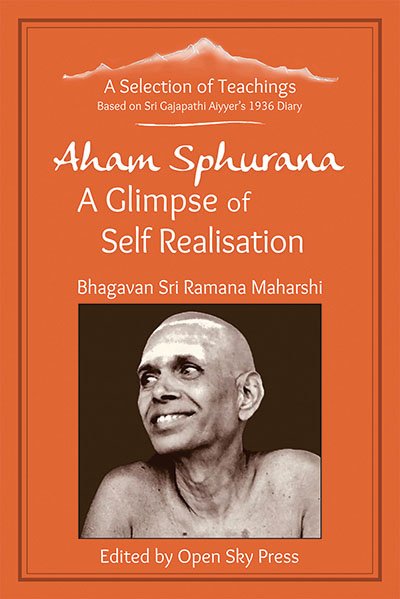
Aham Sphurana – A Glimpse of Self Realisation [Volume 1]

Fascinating dialogues and stories of Ramana Maharshi recorded by Sri Gajapathi Aiyyer in the summer 1936, at Ramana Ashram.
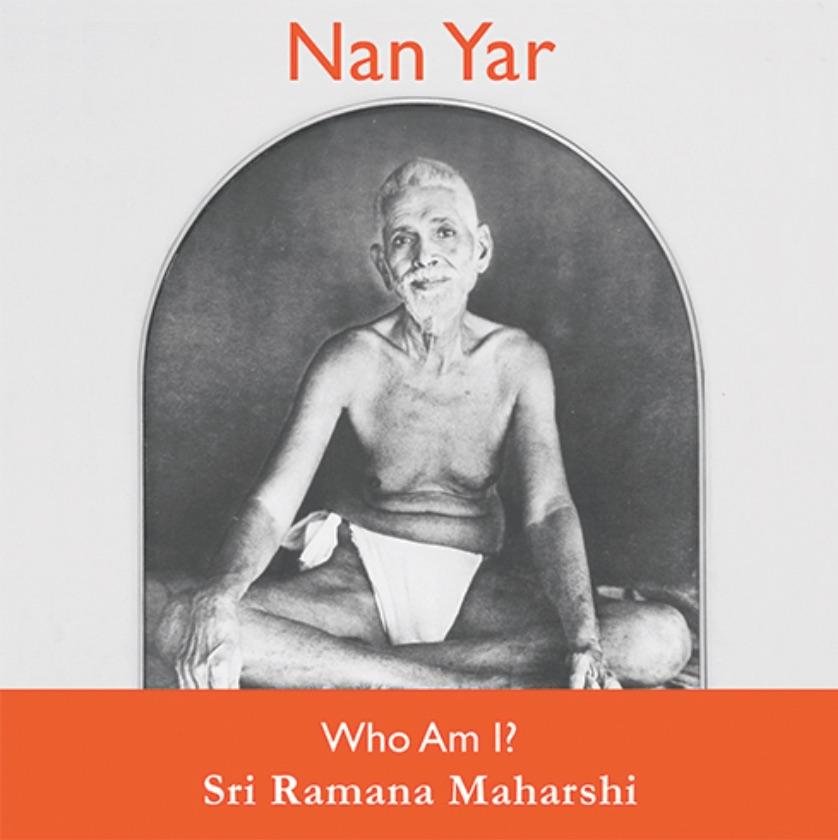
Vichara – Self Enquiry,
Who am I? [Volume 2]

Vichara offers a fresh and focused exploration of Bhagavan Sri Ramana Maharshi’s most profound teaching: Self-enquiry.
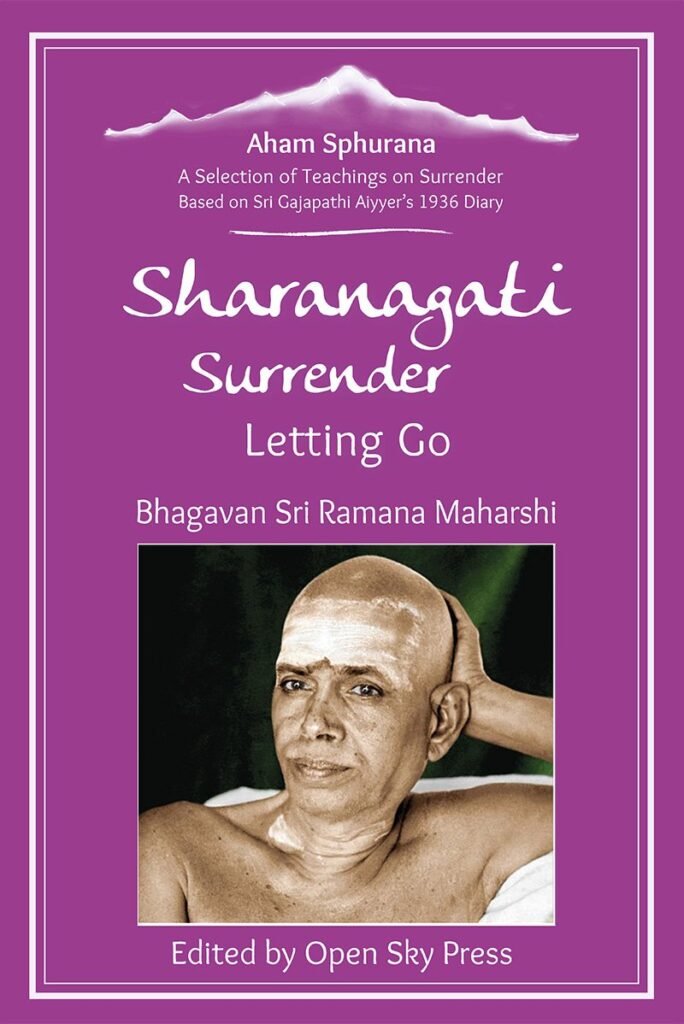
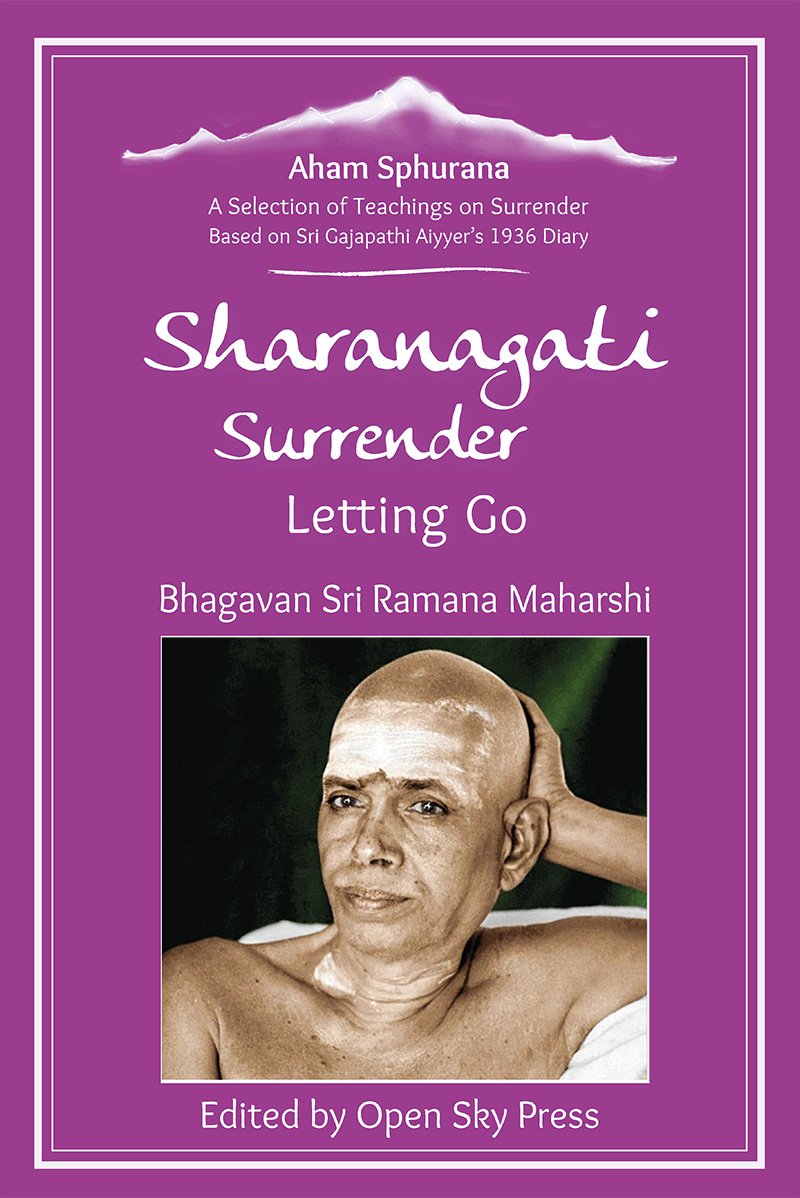
Sharanagathi – Surrender,
Letting go. [Volume 3]

Sharanagathi explores Bhagavan’s direct and powerful path of dissolving the ego through surrender.
Biography
Ma Souris, the daughter of the Telugu writer Chalam, was raised in a strongly Westernised household and initially rejected Bhagavan Ramana Maharshi with almost instinctive dislike. At fourteen, after seeing his photograph in a newspaper, she judged him harshly and dismissed his name and titles as artificial.
Her view shifted after her father’s first visit to Sri Ramanasramam in 1936. Hearing him explain Bhagavan’s teaching— that mind, senses, and body are not the Real, and that one must discover the true “I”—she felt it pointed directly to questions she had carried since childhood. She read Who am I?, began practising Self-enquiry, and experienced growing stillness, devotion, and inner benefit through meditation.
When she finally met Bhagavan at Arunachala, she felt an immediate, wordless recognition and often fell into deep absorption in his presence. Though she struggled with Ashram rituals at first, watching sincere devotion in others changed her attitude, and she came to see beauty in whatever Bhagavan did. In January 1950, she and her father moved permanently to Arunachala; within weeks Bhagavan passed away, and they remained near his samadhi, feeling there was nowhere else to go.

“The question ‘Who am I?’ is not meant for the mind to answer, but for the false self to dissolve in.”
– Ma Souris